
About Burmese Cats
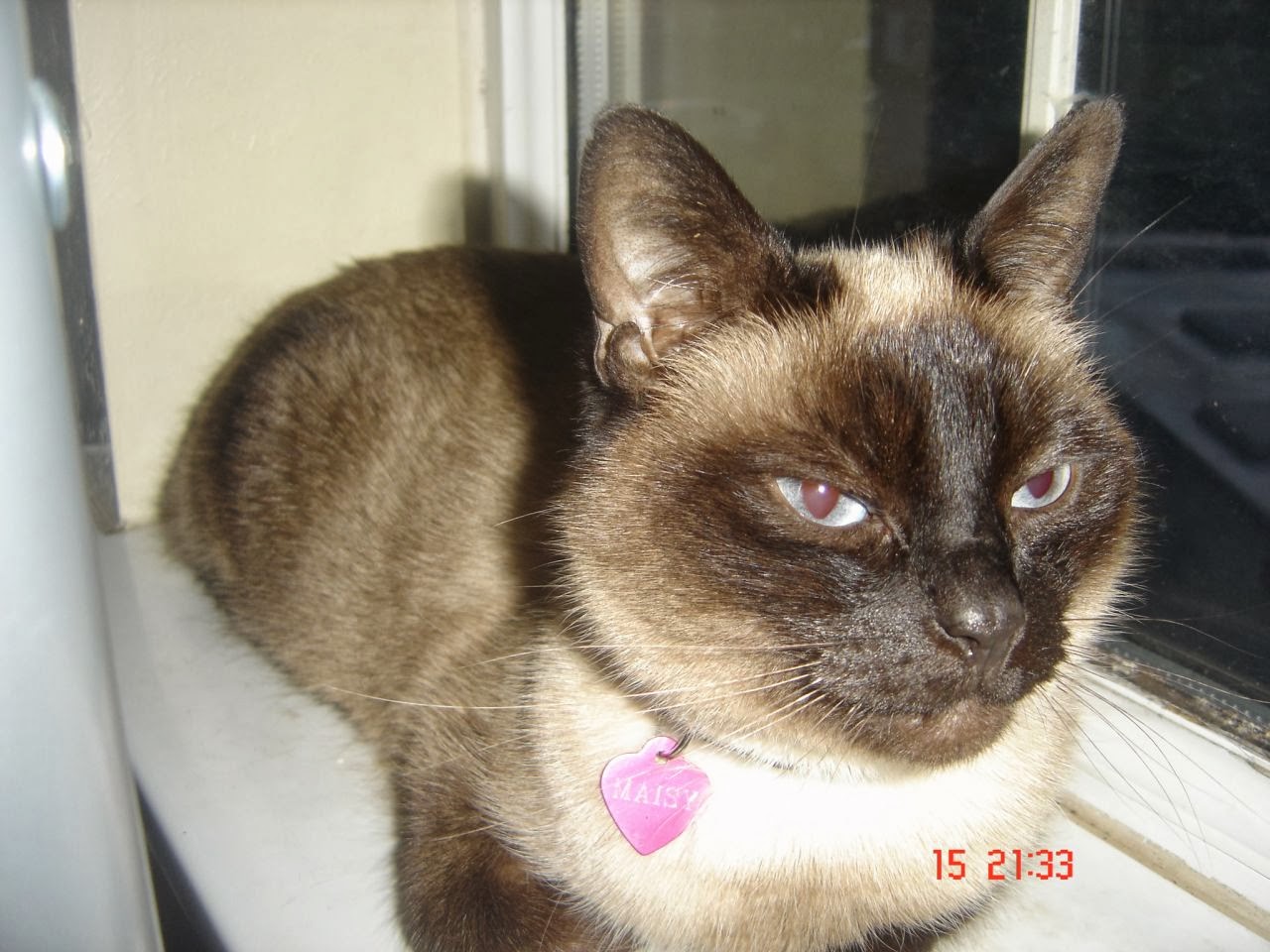
The Burmese is a stocky, smooth-coated cat that descends from ancient cats of Asia. It has become quite popular because of its delightful personality, friendly conversational skills and low-maintenance coat. Burmese are small to medium-sized cats, with broad chests and strong shoulders. They typically weigh much more than one would expect, due to their heavily muscled physique. Burmese are more substantial than their Siamese cousins, although fanciers of the breed may restate this as being fluffier, rather than fatter. British Burmese cats often have longer facial features and a more lithe body structure than the North American Burmese, which have a shorter nose and amore square body shape.
History
Burmese cats are all descended from copper-colored cats from Thailand dating back to the 16th century, and probably even earlier. According to some of the earliest reports, a small brown cat described as a “Chocolate Siamese” was brought from Burma to England in the early 1900s and probably was among the modern Burmese ancestors, or at least quite similar in type. The North American Burmese line can be specifically traced to the early 1930s, when Dr. Joseph Thompson crossed a small, walnut-brown female of Burmese origin (named Wong Mau) with a Seal Point Siamese male. Wong Mau is thought to have been a Siamese-Burmese hybrid of the type known today as the Tonkinese. In any event, the breeding took place in San Francisco, California. Some of the offspring from that cross were a dark, glossy brown; it was these animals that formed the foundation of the modern purebred pedigreed Burmese cat. Wong Mau was bred several times, and many of her offspring were later out-crossed and/or inbred back to Wong Mau herself.
The American Cat Fanciers’ Association (CFA) recognized the beautiful dark chocolate Burmese for registration shortly thereafter, in 1936. The breed rapidly gained popularity and acceptance in Great Britain throughout the 1940s. Many lighter kittens born from these breedings were well-accepted, as well. Initially, they were recognized as a dilute color variety of the Burmese and were registered as Malayans. Eventually, the CFA and the British cat registry recognized these lighter cats as dilute variations of the Burmese.




.jpg)
.jpg)
.jpg)
.jpg)
.jpg)
.jpg)
.jpg)
.jpg)
.jpg)
.jpg)
.jpg)
.jpg)
.jpg)
.jpg)
.jpg)
.jpg)
.jpg)
.jpg)
.jpg)
.jpg)
.JPG)
.jpg)
.jpg)
.jpg)
.jpg)
.jpg)
.jpg)
.jpg)
.jpg)